
This isn’t my usual territory. I normally write about websites, Google and the occasional AI-related panic. But this one affects almost every small business I know in some way, and the deadline is now less than three months away, so I think it’s worth a few minutes of your time.
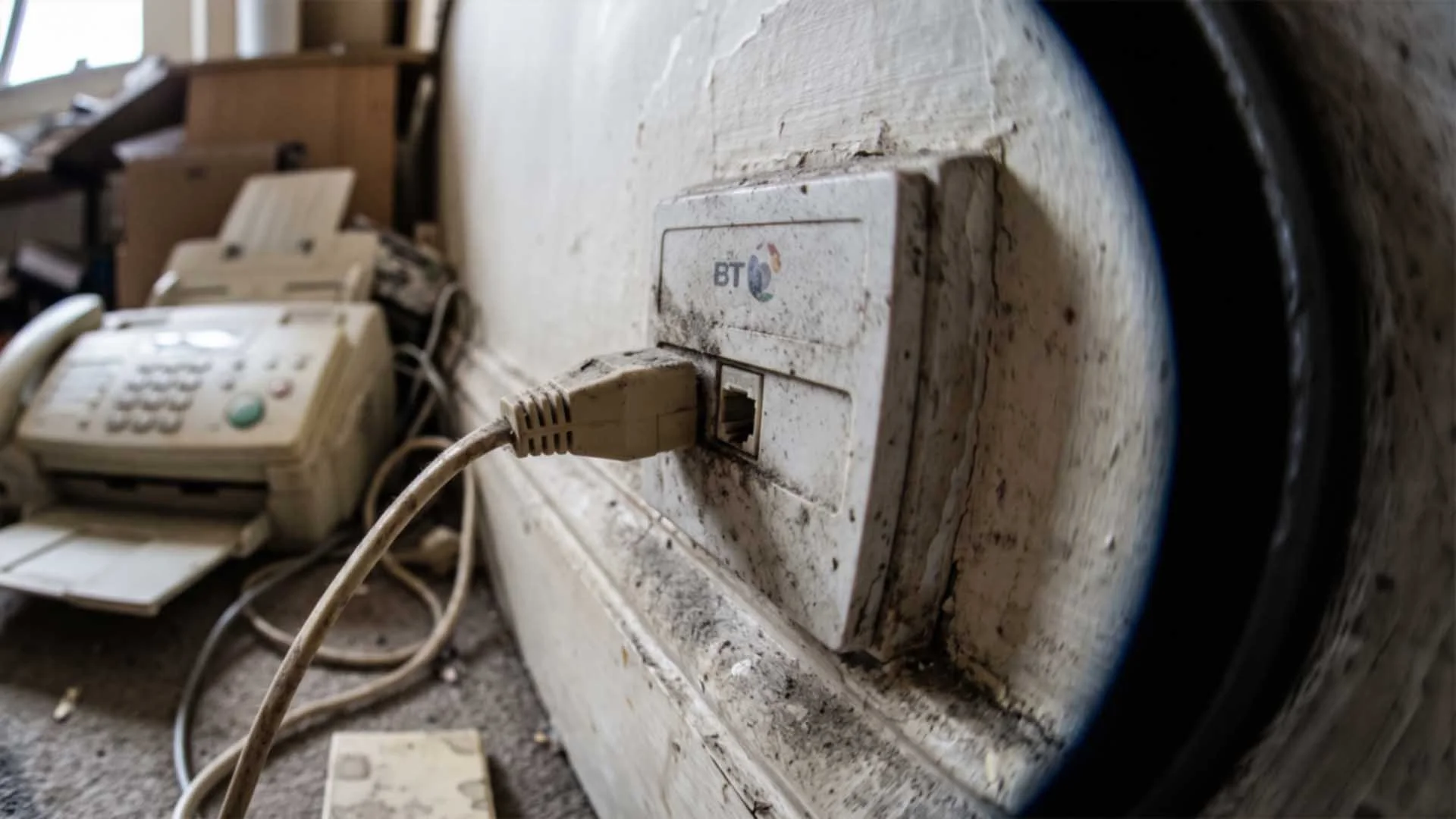
At the start of November, Openreach (the company that looks after most of the UK’s phone lines) wrote to phone and broadband providers to remind them that the old copper phone network will be switched off on 31 January 2027. As The Register reported, that date will not be postponed this time.
If you’ve already moved to a digital phone line, you can probably relax. If you’re not sure, or there’s something in the corner of your shop or office that has been quietly plugged into the phone socket since 2009, read on.
What’s actually happening
For decades, landline calls in the UK have travelled over the Public Switched Telephone Network, usually shortened to PSTN. It’s the old analogue system of copper wires and telephone exchanges. It’s being replaced by digital lines that carry calls over an internet connection instead (you’ll hear this called VoIP, which stands for Voice over Internet Protocol, or BT’s name for it, Digital Voice).
The switch-off was originally meant to finish in December 2025, but it was pushed back after concerns about vulnerable people who rely on telecare alarms. The new date is 31 January 2027, and Openreach’s Big Switch Off page is clear that “everyone with a traditional phone line will need to move to a digital option.”
Older ISDN lines, which many businesses used for phone systems with several lines, are going at the same time. BT Business says that ISDN services “will stop working from 31 January 2027” if they haven’t been moved.
Haven’t most people already switched?
Most have, but not all. In July, Openreach said around 1.5 million lines were still on the old network, and around 350,000 of those were businesses.
The interesting bit is who’s left. James Lilley, Openreach’s Director of All-IP, told The Register that “the straightforward migrations have largely been completed.” What remains are, in his words, “the complex connections that underpin critical operations.” In other words, it’s often not the phone on the desk that’s the problem. It’s the other things.
It’s not just your phone
This is the part that catches people out. Plenty of equipment uses the phone line to send a signal, even if nobody ever makes a call on it. Openreach, Ofcom and the government all list similar culprits, including:
Card payment machines, especially older ones that “dial up” to process a payment. Burglar alarms and fire alarms that phone a monitoring centre when they go off. CCTV systems, door entry systems and intercoms, and lift emergency phones. Fax machines (yes, some businesses still have one). Telecare and personal care alarms, which matters if you run a care business or look after an elderly relative at home. And older office phone systems that run on ISDN.
The government’s own guidance, updated this week, says businesses should review which devices rely on PSTN or ISDN lines. I’d go one step further and say: don’t assume. If something has a phone cable running from it into the wall, find out what it does.
What happens if you do nothing?
You won’t just wake up on 1 February to a dead line, at least not straight away. Openreach says lines that haven’t been moved will go onto something called Emergency Voice and Access Continuity (EVAc), which it describes as “a temporary emergency voice-only service that keeps basic voice calls working for a limited time.”
The words doing the heavy lifting there are “temporary”, “voice-only” and “limited”. Openreach says it “may not support the calling features you use today”, and there’s no published end date. I wouldn’t rely on it for anything that matters, least of all an alarm or a card machine.
It’s also getting more expensive to stay put. Openreach raised the wholesale price of old-style landlines three times during 2026, which it said would “double the current rental price”. Those are the prices charged to providers, but you can guess who ends up paying.
Power cuts are the other thing to know about
An old copper phone line carried its own small electrical current, which is why your landline used to keep working when the lights went out. A digital line runs through your router, so if the power goes off, so does the phone, unless there’s a battery back-up.
Ofcom says that if you depend on your landline (for example, you have no mobile signal, or you rely on a telecare alarm), your provider must offer you a way to contact the emergency services during a power cut, free of charge. Ofcom’s minimum is one hour of back-up. For most businesses, a charged mobile phone is the practical answer, but it’s worth thinking about anything that needs to keep working during a power cut, such as an alarm.
What I’d do this week
None of this is difficult, but it does take a bit of time, so I’d start now rather than in mid-January when everyone else remembers.
First, ask your phone or broadband provider directly whether any of your lines are still on the old network. Openreach’s advice is to call them “as soon as possible”, and it said earlier this year that if your provider hasn’t contacted you, “you need to ask why.”
Second, walk round your premises and make a list of anything plugged into a phone socket. Then contact each supplier (your alarm company, your card machine provider, whoever installed the door entry system) and ask whether it will work on a digital line. Many alarms and card machines can switch to a mobile SIM or broadband connection, but it sometimes needs an engineer visit, and those diaries are going to fill up.
Third, ask about keeping your number. In most cases you can. BT Business says “you can keep your current phone numbers when moving to a digital, IP technology solution.” If a provider tells you otherwise, it may be worth shopping around.
Fourth, check what happens in a power cut, and whether you need a battery back-up for anything important.
If your phone number does change
This is where it overlaps with what I do. If you decide to move provider and end up with a new number, or you take the opportunity to switch to a mobile number or a new VoIP service, don’t forget all the places your old number lives online.
Your website is the obvious one, including the header, footer and contact page, and any “click to call” buttons on mobile. Then there’s your Google Business Profile, which is probably where most new customers find your number in the first place. Don’t forget your Facebook and Instagram pages, your email signature, local directories and any Google Ads you’re running, which can have their own phone number settings. Google is fond of consistency, and so are customers. A number that rings out on your website and connects on Google is a good way to look like two different businesses.
Even if your number stays the same, a digital switchover is a good excuse to ring your own business from a mobile and check it all works, including any voicemail message that still mentions staff who left in 2019.
Need a hand?
I can’t help with your alarm or your card machine, I’m afraid, but if you need your phone number updated across your website, Google Business Profile and social media, or you’d just like someone to check everything matches, I’m happy to help. Just get in touch.